As the global pressure to reduce carbon emissions increases, industry and commerce have also begun to pay attention to this issue. People are beginning to install more and more photovoltaic power generation systems with energy storage. The safety of energy storage systems has also received more attention.
The industrial and commercial energy storage system has large system energy and complex system. Once a fire occurs, it will cause serious safety threats. There are many reasons for fires in energy storage stations. Fires in lithium-ion energy storage system power stations can be roughly divided into two categories: one is mainly caused by electrical fires; the other is mainly caused by chemical energy storage systems caused by battery cells, which are harmful and cannot be completely controlled once a battery fire occurs.
Fire protection measures for industrial and commercial energy storage systems are crucial. It is not only related to property safety, but also to the life safety of personnel. Only by paying attention to the fire safety issues of energy storage systems and taking effective fire protection measures can the stable development of industrial and commercial energy storage be ensured.
2. Fire protection requirements
(I) Requirements for electric energy storage equipment
1. Brief description of energy storage batteries:
The safety performance of lithium-ion battery cells, modules, and clusters shall strictly comply with relevant regulations, such as the provisions of GB/T36276, and pass the inspection of a legally qualified testing agency and obtain a type inspection report. When plastic is used as the shell material and separator material for battery cells and battery modules, the combustion performance level shall not be lower than the B1 level requirement specified in GB 8624. Control harnesses and cables and other components shall be made of flame-retardant materials, electrical interfaces shall be designed to prevent fooling, and exposed live parts shall be insulated and shielded to improve safety. At the same time, the battery module housing, energy storage cabinet, etc. can form a reliable equipotential connection, and thermal insulation materials such as mica and aerogel should be set between the cells in the energy storage battery module to effectively prevent safety problems caused by heat transfer.
2. Brief description of battery management system(BMS):
In addition to complying with the provisions of GB/T 34131,BMS also has power protection functions such as battery overvoltage, undervoltage, pressure difference, overcurrent, short circuit, etc., as well as non-power protection functions such as temperature (overtemperature, low temperature, temperature difference), gas, etc., and can issue graded warning signals or trip commands. In addition, it has a linkage interface with the fire detection alarm system to receive gas warning and fire alarm signals and issue corresponding linkage control instructions. The system should have battery consistency management functions. The number of temperature collection points for each battery module should not be less than 25% of the number of battery cells in the module and not less than 4. Temperature collection points should be set near the positive and negative poles of the module to ensure accurate monitoring of the battery status.

3. Brief description of energy storage cabinet:
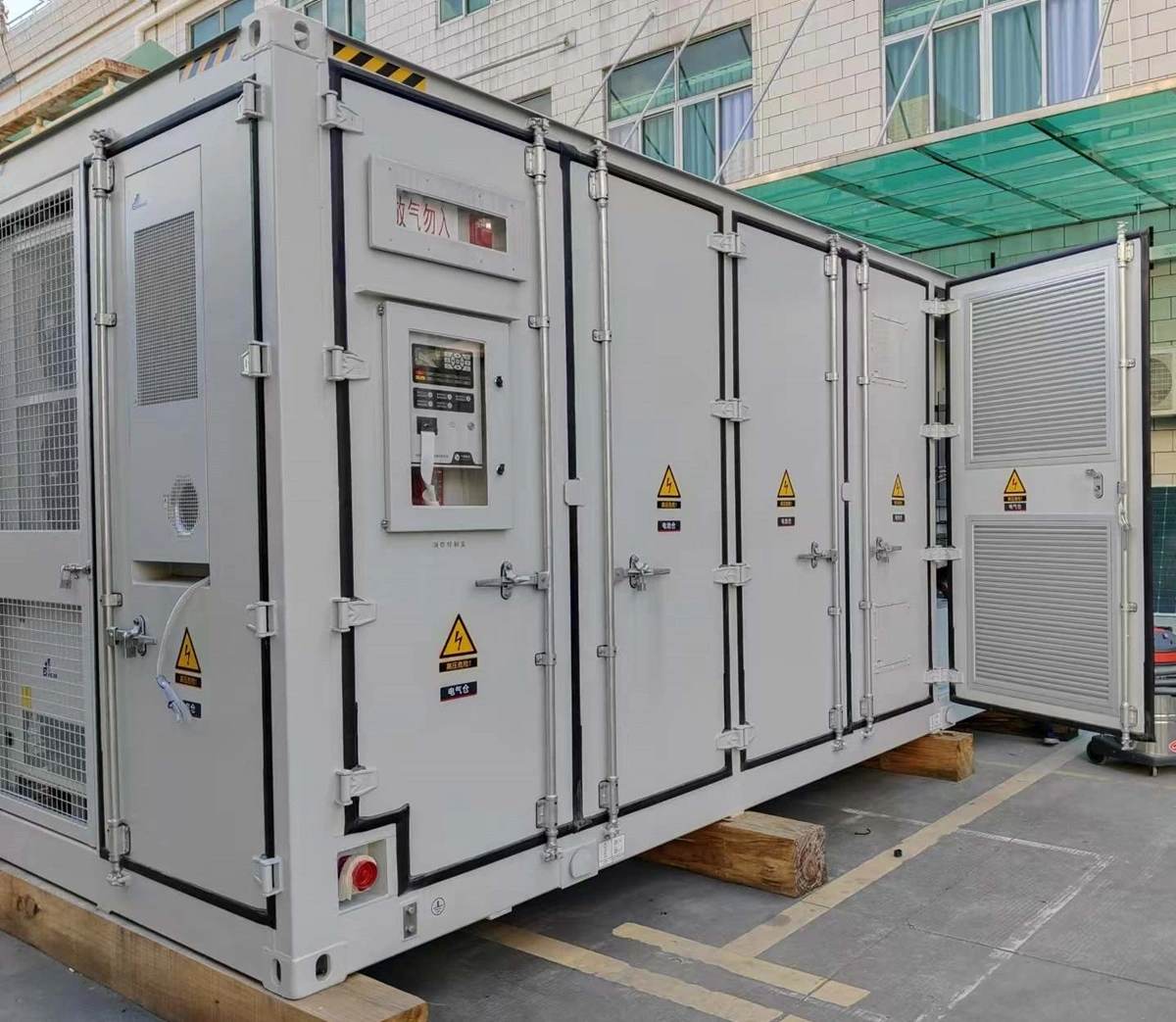
The cabinet surface of an energy storage cabinet should have an anti-corrosion plating or coating, and anti-corrosion level should not be lower than C3. The cabinet should meet the requirements of waterproof and moisture-proof, and the protection level should not be lower than the IP54 specified in GB/T 4208. Its shell structure, thermal insulation materials, and internal and external decorative materials should be flame-retardant materials. Cabinet bodies should be insulated around and on the top, and fire resistance limit should be no less than 0.5 h. Cabinet bodies are equipped with ventilation and heat dissipation facilities, and flammable and harmful gases such as H₂ or CO leaked from the battery should be able to be discharged quickly. There should be nameplate information on the cabinet shell, including but not limited to rated power, rated capacity, commissioning date, etc. Fire distribution line should meet the needs of continuous power supply in the event of a fire. The laying of its wires and cables should comply with the provisions of GB 50016, and the grounding design of power equipment should comply with the provisions of GB/T 50065.
4. Brief description of location selection:
Location selection of energy storage systems should comply with relevant regulations. It should not be adjacent to or set up in places where flammable and explosive dangerous goods are produced, stored, or operated. It should not be set up in places with flammable gases or dust or corrosive gases, nor should it be set up in important overhead power line protection areas. At the same time, energy storage systems should not be set up in crowded places, underground or semi-underground spaces, and the fire resistance level of the building should not be lower than level 2.
(II) Fire-fighting facility requirements
1. Brief description of fire detectors:
Fire detectors should be installed in energy storage cabinet, including but not limited to composite detection of one or more parameters such as gas, temperature, smoke, and pressure, and should comply with the provisions of GB 16838. Each battery module in the energy storage cabinet can be equipped with a fire detector separately, including but not limited to built-in or plug-in detectors. The national standard "Safety Regulations for Electrochemical Energy Storage Power Stations" (GB/T 42288-2022) was officially implemented on July 1, 2023, and clearly stated that the battery room/cabin should be equipped with an automatic fire extinguishing system, which should be linked with BMS, fire detectors or combustible gas detection devices, air conditioning, and exhaust systems, and have remote passive command start and emergency mechanical start functions. Minimum protection unit of the automatic fire extinguishing system should be battery modules, and each battery module should be equipped with a detector and a fire extinguishing medium nozzle separately, that is, "PACK-level detection + fire extinguishing" should be adopted. "Safety Regulations" propose that the fire extinguishing medium should have good insulation and cooling properties, be able to extinguish battery fires and electrical equipment fires, and prevent re-ignition. The main clauses repeatedly mention that detection and alarm devices such as temperature detectors and smoke detectors should be used to ensure the safety of energy storage systems.

III. Fire protection plan
(I) PACK-level protection plan
Brief description: With a single PACK as a protection unit, a composite detector is used to detect the temperature and smoke of lithium iron phosphate (LiFePO4) batteries, to achieve fire warning, and to link the fire suppression device to spray the fire extinguishing agent into the PACK package to suppress the fire.
In industrial and commercial energy storage systems, the PACK-level protection plan is crucial. The composite detector can accurately detect battery temperature, smoke, CO and VOC gases, etc., to quickly determine the fire signal and achieve efficient fire warning. When an abnormal situation is detected, the alarm control device will immediately link the fire suppression device. At this time, the suppression device will accurately spray the fire extinguishing agent into the PACK package through the nozzle, thereby effectively suppressing the fire inside the battery. This PACK-level protection plan has the characteristics of high protection level and high integration density. Combined with the battery management system, it can timely identify the early thermal runaway state of the battery, and quickly take fire extinguishing measures after the thermal runaway of the single battery to prevent the spread of the fire.
(II) Cabinet-level protection plan
1. Brief description of plan 1: When thermal runaway of batteries occurs in the energy storage cabinet, the composite detector detects flammable gas and sends an alarm signal, which links the sound and light alarm and aerosol fire extinguishing device to fully submerge the cabinet fire.
When thermal runaway of batteries, electrolyte leakage, or open flames in electrical equipment occur in the energy storage cabinet, a large amount of flammable gas will be released. At this time, the composite detector can detect the flammable gas and send an alarm signal in the first time. The alarm signal will link the sound and light alarm, send a strong sound and light warning, and remind the on-site personnel to evacuate in time. At the same time, the aerosol fire extinguishing device is linked. After the aerosol fire extinguishing device is activated, it can fully submerge the cabinet to effectively suppress the cabinet fire. This solution can respond quickly at the early stage of the fire and minimize the damage to the energy storage cabinet and surrounding equipment.
2. Brief description of plan 2: When a fire occurs in the energy storage cabinet, the fire detection tube explodes at the highest temperature, the container valve is activated, and the fire extinguishing agent is sprayed from the explosion of the fire detection tube to suppress the fire.
When a fire occurs in the energy storage cabinet, the fire detection tube with a certain pressure inside will be softened and exploded at the highest temperature. By using the pressure drop in the fire detection tube, the container valve is activated to spray the fire extinguishing agent from the explosion of the fire detection tube, directly acting on the fire site, and suppressing the spread of the fire. This solution has the characteristics of rapid response and accurate fire extinguishing, and can play an important role at the critical moment of the fire.
In summary, the fire protection plan of the industrial and commercial energy storage system should be reasonably selected and designed according to the actual situation to ensure rapid response and effective fire extinguishing when a fire occurs, and to ensure the safety of personnel and equipment.

4. Key points for selecting fire extinguishing devices
When selecting fire extinguishing devices for industrial and commercial energy storage fire protection systems, multiple important factors need to be comprehensively considered to ensure that the fire extinguishing device can play the maximum role when a fire occurs.
The first is the type of fire extinguishing agent. At present, common fire extinguishing agents include gas fire extinguishing agents (such as nitrogen, heptafluoropropane, perfluorohexanone, etc.), fine water mist, aerosol, etc. The gas fire extinguishing system has the advantages of fast fire extinguishing speed and high efficiency. Among them, the nitrogen fire extinguishing system is clean and non-toxic, suitable for large-scale centralized energy storage facilities, and can avoid secondary damage to battery components; heptafluoropropane is the mainstream fire extinguishing agent in China. The fire extinguishing mechanism is mainly chemical inhibition, with fast fire extinguishing speed and good cleanliness and insulation; perfluorohexanone, as a new environmentally friendly fire extinguishing agent, has the advantages of zero ozone depletion potential, low global warming potential, high electrical insulation, non-toxicity, and non-corrosiveness, and is particularly suitable for electrical fire fighting. The fine water mist fire extinguishing system is environmentally friendly and efficient. It can quickly reduce the temperature of the fire scene, effectively isolate oxygen, and prevent re-ignition. It is especially suitable for energy storage battery fires. The aerosol fire extinguishing system is easy to install, occupies a small area, can quickly control the fire, and is suitable for fire prevention and control in local spaces in energy storage cabins.
The second is the deployment method. Different fire extinguishing systems have different deployment methods. For example, gas fire extinguishing systems can be divided into pipe network systems and non-pipe network fire extinguishing devices; fine water mist fire extinguishing systems require high-pressure equipment for deployment; perfluorohexanone fire extinguishing systems have cabinet type, prefabricated type, non-pressure storage type, pump group type and other deployment methods; aerosol fire extinguishing systems use fire extinguishing agents composed of solid particles to quickly extinguish fires. When choosing a deployment method, it is necessary to comprehensively consider factors such as the type, scale, layout and environmental conditions of the energy storage system.
Environmental adaptability is also an important consideration. Energy storage facilities may be in different environments, such as large centralized energy storage power stations, distributed modular energy storage facilities, industrial and commercial energy storage cabinets, etc. For different environments, it is necessary to choose an appropriate fire extinguishing system. For example, nitrogen fire extinguishing systems are suitable for large centralized energy storage facilities; fine water mist fire extinguishing systems are often used in distributed and modular energy storage facilities; aerosol fire extinguishing systems are suitable for local spaces in energy storage cabins.
Finally, there is the maintenance cost. The maintenance cost of the energy storage fire extinguishing system includes regular inspections, equipment replacement, system upgrades and emergency fault handling. Regular inspections usually include system hardware testing, software updates, replacement of fire extinguishing agents, and cleaning of pipes and nozzles, accounting for about 30% of maintenance costs. Equipment replacement costs depend on the brand, model, and technical requirements of the components, accounting for about 40% of maintenance costs. System upgrades include software updates and hardware upgrades, accounting for about 15% of maintenance costs. The cost of handling sudden failures generally accounts for 15% of the total maintenance cost. By formulating a reasonable maintenance plan, selecting high-quality equipment and accessories, and cooperating with professional maintenance companies, the maintenance cost of the energy storage fire extinguishing system can be effectively controlled.
In summary, when selecting fire extinguishing devices for industrial and commercial energy storage fire fighting systems, factors such as the type of fire extinguishing agent, deployment method, environmental adaptability, and maintenance cost should be comprehensively considered, and fire extinguishing devices should be scientifically selected and reasonably deployed to ensure the safe and stable operation of energy storage power stations.

V. Comprehensive recommendations for fire fighting measures
(I) Monitoring and early warning
In industrial and commercial energy storage systems, monitoring and early warning are crucial. Advanced monitoring equipment should be set up to monitor key parameters such as battery temperature, voltage, and current in real time. These monitoring devices can continuously collect data on the battery's operating status, and accurately grasp the battery's working conditions through precise sensors and intelligent analysis systems. Once abnormal battery parameters are detected, such as excessive temperature, unstable voltage or abnormal current fluctuations, the monitoring system will immediately automatically warn. At the same time, the warning system will quickly initiate emergency measures, including sending alarm information to relevant personnel, automatically cutting off circuits that may be at risk, etc., to prevent the potential fire risk from further expanding.
(II) Automatic fire extinguishing
Automatic fire extinguishing devices are an important part of fire protection in industrial and commercial energy storage systems. The device can automatically start the fire extinguishing procedure after sensing the fire source. When a fire occurs in the energy storage system, the automatic fire extinguishing device will respond quickly and accurately lock the location of the fire source through advanced detection technologies such as temperature sensors and smoke detectors. Once the fire source is confirmed, the fire extinguishing device will immediately release the fire extinguishing agent, which can quickly extinguish the flames and prevent the fire from spreading. The response speed and fire extinguishing effect of the automatic fire extinguishing device are crucial to protecting the safety of the energy storage system, and can promptly control the fire in the early stage of the fire and reduce the losses caused by the fire.
(III) Mechanical smoke exhaust
Mechanical smoke exhaust devices play a key role in industrial and commercial energy storage systems. When a fire occurs in the energy storage system, a large amount of smoke and toxic gases will be generated. If these smoke and toxic gases cannot be discharged in time, it will pose a serious threat to the life safety of personnel and will also affect the progress of fire fighting. The mechanical smoke exhaust device can automatically start and quickly discharge the smoke and toxic gases generated by the fire to the outside. Through a powerful exhaust system, harmful gases are discharged to keep the indoor air fresh, creating favorable conditions for personnel evacuation and fire fighting and rescue. The efficient operation of the mechanical smoke exhaust device can effectively reduce the harm caused by the fire and ensure the safety of personnel and equipment.

(IV) Fire extinguisher device
The use of cabinet-type perfluorohexanone fire extinguishing device is one of the effective measures for fire fighting in industrial and commercial energy storage systems. The device is suitable for multiple scenarios such as battery module, battery cabinet and energy storage container fire fighting. Perfluorohexanone as a fire extinguishing agent has good fire extinguishing performance and environmental protection characteristics. In battery module fire fighting, it can effectively suppress the fire inside the battery, accurately spray the fire extinguishing agent into the battery module, and prevent the spread of thermal runaway. In battery cabinet fire protection, the perfluorohexanone fire extinguishing device can be quickly activated when a fire occurs in the cabinet, effectively extinguishing the fire and preventing the fire from spreading to other equipment. For energy storage container fire protection, the perfluorohexanone fire extinguishing device can provide comprehensive protection for the entire container, ensuring that the fire can be quickly controlled in the event of a fire and protecting the safety of the energy storage system.
6. Fire drills and training
Regular fire drills and training are important safeguards for the fire safety of industrial and commercial energy storage systems. Through fire drills and training, employees' safety awareness and ability to respond to fires can be improved, ensuring that measures can be taken quickly and effectively in the event of a fire to reduce losses.